

1. Canada’s net zero target and the path ahead
Canada has committed to reducing its greenhouse gas emissions to net zero by 2050. To support these efforts, the federal government has legally enshrined that goal, created a mechanism for defining five-year milestones on the way to achieving it, and established a governance framework to help keep the government on track.
In January 2021, the 91ɫÇéƬ published the first comprehensive study of what this net zero goal means in practical terms, The report modelled more than 60 different scenarios for Canada’s energy future to determine the feasibility of the net zero goal, consisting of various combinations of established “safe bet” solutions and less certain “wild card” solutions that could be used to achieve it.
The biggest takeaways from that foundational report are that Canada’s net zero goal is achievable, and that getting there requires a massive, early build-out of clean electricity and expanded electrification.
Currently, however, Canada’s aging electricity infrastructure is not aligned with a net zero future. In particular, intermittent renewable energy sources such as solar and wind, which are essential for reaching Canada’s goal, present challenges for electricity systems that aren’t ready to handle them. Furthermore, the regulatory framework governing Canada’s network of provincially managed grids is rigid and often misaligned with net zero goals, which creates major barriers to innovation. Electricity grids are far too important to Canada’s vital progress toward its net zero goal to perpetuate this status quo any longer—something Canada’s new government has acknowledged in its recent commitments to supporting the development of cleaner grids.
Fortunately, Canada is not alone in this energy transition. Upgrades to electricity infrastructure and systems to support decarbonization are already underway around the world. Germany, for example, has led the way for more than 20 years, with a national commitment to producing electricity from renewable sources that has seen the share of renewables on German grids expand from less than five per cent to more than 40 per cent since the start of the century. As Germany pushes on toward even more ambitious goals, including a nationwide phaseout of the coal-fired power plants that still supply about one-quarter of its power and an economy-wide target of net zero by 2045, German insight and expertise can provide valuable lessons for Canada’s own net zero push.
2. German leadership in the global energy transition
Germany’s leadership role in the growth of renewable energy and other climate solutions has been guided since 2002 by a range of federal and state-level policy tools united under the banner of die Energiewende (“the energy transition”). Germany’s pioneering work over the years has included the first industrial-scale ramp-up of the solar industry, innovations in energy efficiency, climate-friendly design for everything from homes to heavy industry, and a lead role in political negotiations to expand its transition goals to the entire European Union.
In some ways, Canada is embarking on its pursuit of net zero with a huge head start over Germany. The German transition began from a massive reliance on coal-fired power plants, whereas Canada’s electricity infrastructure is already more than 80 per cent non-emitting, thanks to an abundance of hydroelectric and nuclear power. But Canada’s national figure masks a sharp regional variation between provinces with predominantly hydroelectric and nuclear grids and those with mostly fossil-fuel-based grids (Shaffer 2021). Both the Canadian and German grids, however, are highly centralized and built around large-scale power plants with readily dispatched electricity supplies. Germany’s Energiewende, which has been dealing for more than a decade with the challenges of ramping up intermittent renewables and rewriting outdated regulatory, legal, and financial frameworks, thus has many lessons to teach Canada about how best to accelerate its transition.
3. NEW 4.0 and the future of net zero grids
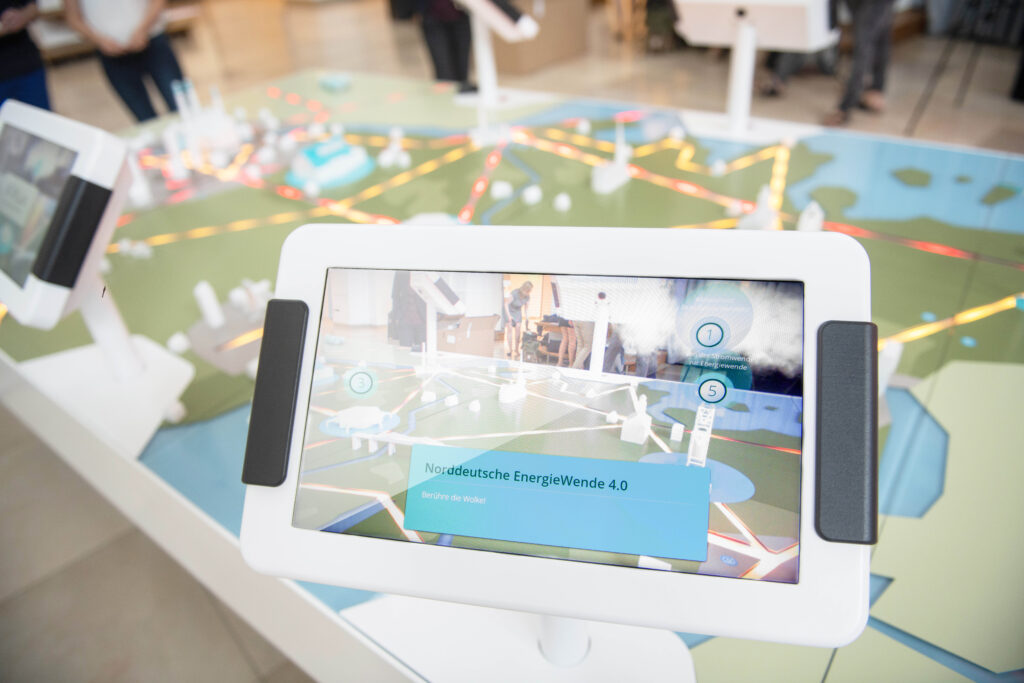
As Germany enters the next phase of its Energiewende, pursuing a target of 65 per cent emissions-free power by 2030 and net zero nationwide by 2045 for all energy production and use, it has begun to tackle the most difficult technical, logistical, and political questions raised by the redesign of its grids for intermittency, distributed generation, and large-scale storage. In support of this, the German government’s Federal Ministry of Economics and Energy launched a “Smart Energy Showcase” in 2016—a funding program to launch experiments in next-generation digital technology to assist the Energiewende in achieving its goals. One of these projects was Norddeutsche Energiewende 4.0 (the North German Energy Transition 4.0, or NEW 4.0).
NEW 4.0 was conceived by local and state officials in the northern German state of Schleswig-Holstein and the neighbouring city-state of Hamburg to showcase its leadership in the energy transition and develop tools for even more renewable energy use, both in the state and across the country. Schleswig-Holstein is Germany’s wind energy heartland, home to abundant wind power resources both onshore and offshore along its North Sea coast, as well as a major manufacturing hub for wind turbines. As a leading clean-energy region within a leading clean-energy nation, Schleswig-Holstein stands among the vanguard of the energy transition globally, making it a particularly robust model for Canada’s net zero road ahead.
Northern Germany’s transition is already running into problems that Canada too is expected to encounter. The state of Schleswig-Holstein is deeply entwined economically with the major industrial and port city of Hamburg to the immediate south—the primary customer for the state’s electricity, whose heavy industries and their relatively high emissions require more than simply adding additional wind power to the grid. (Large-scale industrial operations such as aluminum smelters and steel plants, for example, are dependent on the reliable on-demand energy flows from centralized power plants, and retrofitting them to work with technologies such as intermittent wind power and energy storage obliges a rethink of every aspect of both the power market and the respective production processes.) The regional grid already suffers from significant grid congestion at times of peak wind power production, often dealt with inefficiently through re-dispatch or curtailment.
The problems of intermittency, grid congestion, outdated technology, and legal and regulatory barriers present in Schleswig-Holstein mirror challenges Canada’s grids are expected to encounter as its pursuit of its net zero goal accelerates. The experience of Germany’s NEW 4.0 project provides an excellent case study, allowing Canadian jurisdictions the opportunity to anticipate and avoid clear stumbling blocks along the way.
The project
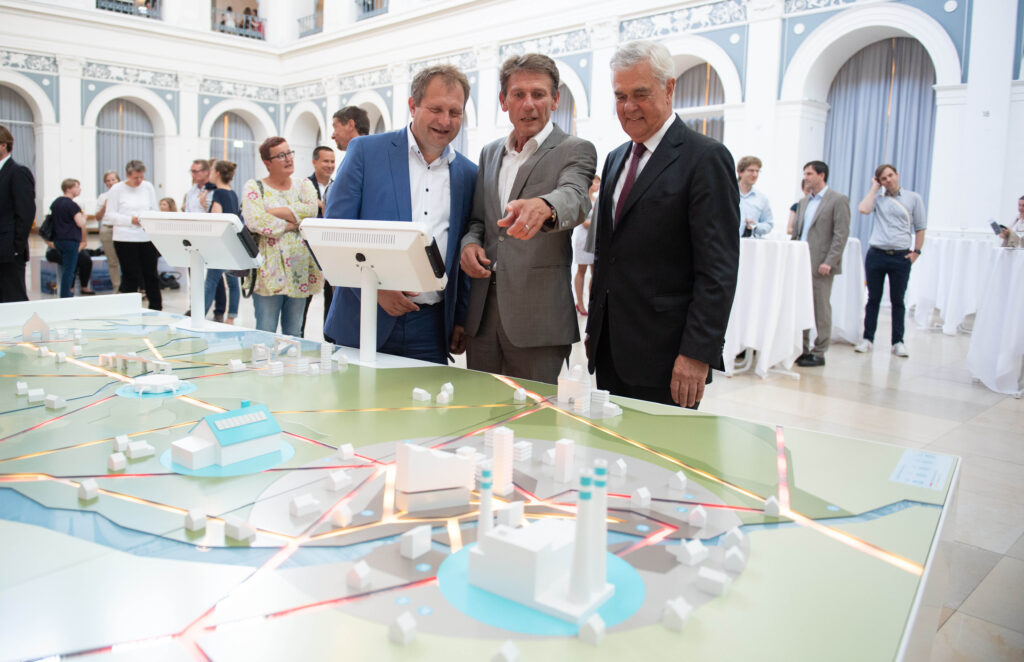
The NEW 4.0 project, which ran from 2016 to 2020, billed itself as a “blueprint for the energy transition,” launched in “a model region for the Energiewende.” The project’s intent, beyond the technical specifics, was to demonstrate that an entire region of Germany—the federal state of Schleswig-Holstein and neighbouring city-state of Hamburg—would be able to operate on 100 per cent renewable energy as early as 2035.
With more than 60 per cent of the regional grid’s capacity consisting of renewables at the project’s launch in 2016 and more than 18,000 jobs already in the regional clean energy industry, Schleswig-Holstein stood at the forefront of Germany’s (and Europe’s) energy transition and provided a strong model for future grid development. The region also faced some of Germany’s steepest costs—around one-third of the approximately €1.2 billion in costs nationwide were borne by Schleswig-Holstein and Hamburg alone due to grid inefficiencies and imbalances of supply and demand (the costs of which were heightened by the region’s greater reliance on non-dispatchable generation).
NEW 4.0 brought together 60 partners from both the public and private sectors, including grid operators, public utilities, and local and regional government agencies, as well as technology companies (among them Siemens Gamesa, Acciona, Nordex and Vattenfall) and major producers of steel, aluminum, copper, and chemicals. Total project funding for the five-year project was around €80 million, with €45 million coming from the German government’s Federal Ministry of Economics and Energy.
The conceptual framework for NEW 4.0 was loosely based on an “innovation sandbox” framework. Northern Germany served as a “model region” in which to test new applications, business models, market mechanisms, and technologies. This regulatory space for experimentation hosted approximately 20 simultaneous demonstration projects. The centrepiece was an “Energy Platform”—a digital pricing and load management tool for the region’s grid, powered by blockchain technology and intended to use the flexibilities of supply and demand in the region to stabilize the grid and create cost-cutting and efficiency opportunities for both energy suppliers and electricity consumers. The platform allowed large industrial customers, storage technologies, hydrogen fuel providers, heat generation facilities, and small electricity producers to trade excess supply and demand of electricity on an open marketplace. Developing tools for this kind of load management is a crucial step in the path to net zero in any jurisdiction.
NEW 4.0 proved the clean-grid concept: from a technical standpoint, large-scale industrial economies can be run pretty much completely on renewable electricity and other currently available clean technologies.
Werner Beba, a business professor at the Hamburg University of Applied Sciences (HAW-Hamburg) and the project coordinator for NEW 4.0, summarized the project’s core focus: “We have taken the next major step [toward 100 per cent renewable power] by testing the coupling of the electricity sector with the heating and industrial sectors. Functioning market platforms have been created to reduce congestion in the electricity grid, intelligently control energy flows, and harness currently curtailed electricity volumes. We have used green electricity to replace gas, coal or oil in heat supply and in industrial operations. We have tested the use of hydrogen in the industry, the heating and mobility sectors, which also helps to reduce greenhouse gases. In addition to the technical innovations, we have also learned which factors are crucial for ensuring broad social acceptance.”
NEW 4.0 demonstrated that electricity can be supplied, as the project summary report explains, “on demand to different consumers at any time in the amount required, while also keeping the grid frequency stable” (Beba et al. 2020). The project provided a successful test of the integration of energy-intensive consumers in Hamburg’s industrial sector with wind power production in Schleswig-Holstein. In short, NEW 4.0 proved the clean-grid concept: from a technical standpoint, large-scale industrial economies can be run pretty much completely on renewable electricity and other currently available clean technologies. NEW 4.0 also revealed some of the non-technical shortcomings of current energy systems—economic, legal, bureaucratic, political—that most urgently need to be addressed to achieve net zero goals in Germany and Canada alike. (These challenges are discussed in Section 5 below.)
The NEW 4.0 projects
NEW 4.0 involved approximately 100 sub-projects across the region, with particular focus on 20 full-scale demonstration projects. These included:
- demonstrations of new technologies, ranging from battery, heat, and hydrogen storage systems to household-scale smart appliance applications
- demand-response systems to increase flexibility for large-scale industrial customers
- digital trading platforms to create marketplaces for short-term trading of surplus power between producers and consumers
Let’s consider a few of these with the greatest potential relevance to Canada’s energy transition in detail.
The Energy Platform
Developed by Hamburg Energie, the primary public utility company in the city of Hamburg, the Energy Platform is a digital application using blockchain technology to enable “the rapid regional trading of flexible renewable energy, contributing to grid stability and security of supply while also maximizing the value of surplus energy from wind and other renewable sources. Participants in this demonstration project included three of Hamburg’s largest industrial operations: ArcelorMittal (steel production), Trimet (aluminum), and Aurubis (copper). By establishing a marketplace for producers and consumers of renewable energy, the Energy Platform allowed consumers to contract directly with producers to meet their planned electricity demand.
Harnessing peak wind power
In the small city of Norderstedt, a satellite of Hamburg, the local utility company, Stadtwerke Nordestedt, joined the NEW 4.0 project with a demonstration of load management strategies and technologies to take advantage of low-cost excess wind power. The project signed up 1,000 residents to receive a special tariff for using electricity at times of peak wind power production, reducing rates at those times to €0.05 – 0.15 per kilowatt-hour (from normal rates of as much as €0.30). Participating homes were equipped with a switch box and four connected sockets. Large appliances plugged into the sockets were automatically switched on when wind power production was at its peak. Dishwashers and clothes washers were among the most common appliances operated using the sockets, but the mix also included phone chargers, electric bikes, and even electric cars. During the 20 months of the demonstration, the 1,000 homes made use of 371 MWh of power that otherwise would have been wasted; the peak wind use amounted to about 10 per cent of each home’s overall energy use on average.
Power to aluminum and power to steel
At major aluminum and steel production facilities in Hamburg, NEW 4.0 projects introduced systems to efficiently pair industrial-scale energy demand to intermittent renewable energy supplies. At Trimet’s aluminum plant, ten smelting furnaces were equipped with specially designed heat exchangers and control systems, allowing the plant’s production to be scaled up and down as available wind power fluctuates. When there was excess power, production could be increased while the heat exchangers dissipated the excess heat to maintain the constant high temperatures required for aluminum smelting. When there were shortages of electricity, the heat exchangers functioned as insulators, preventing the furnaces from cooling down and in effect acting as virtual batteries for the facility. If the Trimet plant’s 270 furnaces were equipped with the heat exchangers, the result would be a battery capable of storing 3,800 MWh of wind power for several days, reducing the need to switch off nearby wind turbines during periods of particularly high wind.
At ArcelorMittal’s Hamburg steel plant, meanwhile, two NEW 4.0 sub-projects tested ways of adapting steel production to intermittent renewable power supplies. One of these tested the ability to “time-shift” production, increasing the smelter’s output during periods of high wind. This proved to be technically feasible, but it would not make economic sense under current market conditions in the region. The other sub-project investigated the viability of using electricity from renewable sources to replace some of the natural gas currently used to fire the plant’s smelters.
Large-scale storage
In the north of Schleswig-Holstein, near the Danish border, a joint venture of the Dutch utility company Eneco and battery manufacturer Mitsubishi installed the largest lithium-ion battery storage facility in Europe. The 48-MW/50-MWh installation was sited near large-scale wind and solar farms at a spot with excellent grid connections. Though capable of supplying more than 5,000 homes with 24 hours of electricity, the storage facility has to date only been used to balance power load and improve stability on the regional grid.
Power to hydrogen
This NEW 4.0 project combined a 2.7-MWh battery storage facility with an electrolyzer and hydrogen filling station to examine the feasibility of hydrogen fuel as a means of reducing the amount of curtailed wind power on German grids. Wind turbines in northern Germany produce about 80 per cent of all the curtailed power in the country, due to high wind power production overloading the grids. This challenge could be alleviated by storing peak wind power and converting it to hydrogen fuel for use in mobility and heating.
5. Canada’s net zero target and the next-generation grid
The NEW 4.0 project was intended to provide a model for Germany’s future energy infrastructure development as it pursues a nationwide goal of net-zero emissions by 2045. NEW 4.0 focussed on the significant upgrades, technological innovations, re-design work, and regulatory reinvention that will be required to build the grids that the energy transition requires. The most important lessons from this four-year innovation experiment, as noted in the project’s final report (Beba et al. 2020), are:
- Grid expansion is not enough. The reliability of the emissions-free grid will require decentralized load management, innovative storage technologies, and electricity markets that reward flexibility. And these features must be available at low cost.
- The technology is ready. “We currently already possess the necessary facilities, market instruments, ICT infrastructure and know-how” to build grids ready for a 100-per-cent-renewable future, the NEW 4.0 final report explains. The necessary flexibility required to avoid curtailment, find customers for excess renewable power, and overcome power shortfalls can be provided by a range of stakeholders, helping to improve grid stability and avoid grid congestion.
- The financial and regulatory frameworks aren’t ready. “What is missing,” the NEW 4.0 final report notes, “are adjustments to the legal framework as well as financial incentives to implement the newly available technological and market solutions rapidly, effectively and economically.” The rules, regulations, and rate structures of German grids are not yet ready to create markets for these innovations and incentivize deployment of the new technologies. The business case simply isn’t there yet, and the evolution of the legal framework in which electricity infrastructure operates has not kept pace with technological changes. As Oliver Arendt of the Hamburg University of Applied Science, who served as a project manager on NEW 4.0, the project arrived at the same conclusion that the other four projects funded under the same federal “Smart Energy Showcase” initiative reached: “We need to redesign the way we pay for electricity.” The current approach to electricity rates in Germany, even 20 years into the Energiewende, still does not encourage a business case for technologies and systems that improve flexibility and pursue net zero goals, particularly regarding the way revenues are distributed to the energy system’s stakeholders.
- Industrial stakeholders have a major role to play. “Industry is a key driving force in decarbonization and effective climate protection,” the NEW 4.0 final report explains, and the industrial participants in NEW 4.0 projects demonstrated that their consumption can be synchronized with renewable energy generation using smart energy technologies and more flexible market mechanisms. “Large industrial electricity consumers are technically capable of using additional wind power even at short notice. Similarly, the industry can also reduce its energy consumption when the production of green electricity is low.”
- Better data analysis is urgently needed. Owing to the impact of weather changes on renewable energy production, grid operators need greater data volumes in order to respond quickly to short-term changes, while real-time analysis of data is also vital for the operation of complex, decentralized power generation and more flexible supply and demand. On all fronts, more and better data is crucial for the future of the emissions-free grid.
Thorsten Müller, founder of the Foundation for Environmental Energy Law, who oversaw NEW 4.0’s work on market conditions and the regulatory framework, provided this summary of the project’s main lessons: “Firstly, as a basic prerequisite, we require a great deal more electricity from renewable sources and need to create the necessary preconditions in energy, planning, and approval laws, otherwise it will not be possible to achieve greenhouse gas neutrality. We also need electricity from renewables in the heating and transport sector—the keyword is sector coupling—and in industry. Secondly, we will have to restructure the energy industry in such a way that it consistently focuses on fluctuating renewables and assigns real value to efficiency. Thirdly, we need to transform the largely isolated energy sectors into a unified energy system and fundamentally redesign the law as a control instrument: away from contradictions and complexity and towards coherent, cross-sectoral energy laws.”
Lessons for Canada
There are of course many significant differences between the German and Canadian contexts regarding geography, resources, economies, and politics. Perhaps most significantly, Germany’s federal government has far more authority over energy policy than Canada’s federal government does. Still, the attempts to date to prepare Canadian grids for the coming energy transition have uncovered similar challenges and opportunities to those that have emerged from the NEW 4.0 project. Despite the differences, Canada can learn a lot from the German efforts as both countries pursue net zero.
The primary challenges for Canada, as in Germany, are not technological but regulatory, legal, and structural.
QUEST Canada, for example, is a non-governmental organization that partners with Canadian governments to accelerate the energy transition, and its recent work has included collaborations with the Ontario government and Ontario Power Generation on developing an innovation sandbox for the province’s energy infrastructure. QUEST’s analysis indicates that the primary challenges for Canada, as in Germany, are not technological but regulatory, legal, and structural (QUEST 2021).
Current regulatory mandates in Canada prescribe a very narrow view of costs and benefits, meaning many of the changes necessary to accelerate the energy transition are not incentivized and innovation is not encouraged. “To get more innovation,” says Eric Timmins of QUEST, “you have to consider non-financial aspects.” But regulators can only work with what is in their mandates, and the system in general rewards risk-averse conservatism regarding innovation. Policymakers will have to take the initiative to encourage these changes, including by sending clear signals through a rising price on carbon or regulatory constraints. But given their own risk aversion, they will also need to create spaces for experimentation, innovation, and proof-of-concept work—which is where innovation sandboxes similar to the NEW 4.0 project’s approach become crucial.
The ultimate lesson of Germany’s pacesetting NEW 4.0 project, however, is that it provides clarity on the daunting scale of the change that electricity systems will have to undergo on the way to net zero. The technologies to reduce emissions are increasingly ready to go, but they cannot solve the myriad problems of finance, regulation, and political will that must be addressed. Changes throughout the system are needed to invite innovation and properly reward approaches that accelerate the drive to net zero. Innovation sandbox projects like NEW 4.0 are nonetheless enormously helpful in catalyzing that larger task, giving innovators and regulators alike a space to prove the viability of the net zero toolkit.

We thank Konrad-Adenauer-Stiftung for their financial support in producing this case study.
Works Cited (click to expand)
Beba, Werner, Matthias Boxberger, Janina Grimm, Martin Heins, Onnen Heitmann, Kaja Juulsgaard, Hanna Naoumis, Thorsten Müller, Klaus Schweininger, and Matthias Weng. 2020. NEW 4.0: Showcasing the energy landscape of tomorrow. Renewable Energy Hamburg.
QUEST. 2021. A State of Renewal: Ontario’s Innovation Sandboxes.
Shaffer, Blake. 2021. Technical pathways to aligning Canadian electricity systems with net zero goals. 91ɫÇéƬ. https://climatechoices.ca/wp-content/uploads/2021/09/CICC-Technical-pathways-to-aligning-Canadian-electricity-systems-with-net-zero-goals-by-Blake-Shaffer-FINAL-1.pdf


